Remembering Philip Lewis
6.52-57
6.52-57
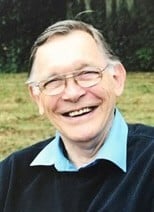
In 1962, Philip was working in Oxford for the Bains timber retailing company and on December 21st that year his life changed for ever. He had been attending a party with friends in London, and in the evening when they were on their way home travelling along the Iffley Road in Oxford, the driver briefly fell asleep. The car crashed into a lamp post and Philip, in the front passenger seat, took the brunt of the impact breaking his neck. He said his only regret in life was not stopping for a rest or sleep that night.
After being taken initially to the John Radcliffe hospital in Oxford, he was transferred to the Spinal Unit at Stoke Mandeville. Philip was the first to admit that he was blessed with fortune from the treatment he received from the hospital staff at Stoke Mandeville who were the only ones who ever really understood his condition. The spinal expertise available was to provide reassurance and hope which were absolutely pivotal throughout his life. His surgeon was Sir Ludwig Guttman, also known as ‘Poppa’ Guttman. Philip embraced Guttman’s philosophy that activity was instrumental in handling disabilities. This philosophy went on to create what we now know as the Paralympics.
Philip received endless physiotherapy and rehabilitation at Stoke Mandeville for almost a year. During this time Guttman and his physiotherapist Bill Preston noticed increasing movement in Philip’s thumb and detected an opportunity that table tennis could facilitate Philip’s recovery. His appreciation of Guttman led to Philip’s founding of the Poppa Guttman Trust to ensure Guttman’s legacy would always be remembered. The combination of Philip and table tennis never looked back.
At first, Philip was the only wheelchair player to take part in an able-bodied league. His performances gained rapid recognition and he was invited to play in Japan. Soon after that he was playing in Germany and representing Great Britain. In the 1966 Commonwealth Games in Jamaica, he won a Gold Medal in the Doubles and a Bronze in the Singles. As a keen Royalist, you can imagine Philip’s pride in having the then Duke of Edinburgh and Prince Charles watching the events, together with his father.
Philip was a tenacious campaigner for getting opportunities and fairness for wheelchair users. He was in many ways ahead of his time and his contribution to this cause and the benefits of his labours cannot be over emphasised. He believed passionately and strongly that wheelchair users should be seen as sports people not disabled. Consequently, when he was awarded an MBE, it was for services to sport, not for the disabled.
He founded the British Table Tennis Association for the Disabled, and intuitively understood how publicity would help his campaigning. Princess Diana soon realised how persuasive Philip could be: he convinced her to be Patron of the Charity. He had not only secured her support for the event but even enticed a swanky Park Lane hotel to foot the bill. He used every opportunity, including BBC appearances, to emphasise that ‘disability’ was really about ‘ability’.
His campaigning style never took ‘no’ for an answer and was instrumental at improving wheelchair spectator access at Wimbledon and Twickenham.
In 1983, he fought for wheelchair inclusion in the Reading half marathon. This was a first for such races before achieving similar results with Chris Brasher at the London Marathon, at which he ensured wheelchair competitors would be at the start of the field and not the back as had been proposed.
At the 2012 London Paralympics, it was a fitting recognition that Philip’s lifetime devotion to wheelchair causes and sport led to him being asked to be the last carrier of the Olympic torch before it entered the stadium. He reminded us how the Paralympics was now the third largest sporting event in the world.
After his rehabilitation at Stoke Mandeville, it was clear he could not continue working at the Bains timber yard in Oxford. He decided to train as a solicitor in Guildford and qualified in 1970, an achievement of which he was exceptionally proud.
His love of parties and planning them were so advanced that only recently he wanted to make sure the deposit had been paid for his 90th birthday party in three years’ time.
Sadly, he didn’t make his 90th but my own investigations suggest he was the longest living tetraplegic in the UK at the time of his death. He only missed being the longest ever living UK tetraplegic by two years. A remarkable achievement of dogged determination and bravery.
He was the first to admit that this would not have been possible without the outstanding support of a unique combination of people. He was blessed by the practical assistance from many young ladies working as au pairs from countries as far afield as Argentina, Spain, Switzerland, and France. This was followed by years of support from his devoted sister Patricia, and subsequently his nephews and nieces Geoff, Sarah, Tim, and Ange.
Full of fun, resilience, courage and bravery, Philip was a wonderful friend to so many, and will be deeply missed by all of us who knew and loved him.
Extract from the Eulogy presented by Mark Hutchison, nephew-in-law, at Philip’s funeral on 11th October 2025.