Remembering Patrick ‘Pat’ Purcell
Staff.66-90
Staff.66-90
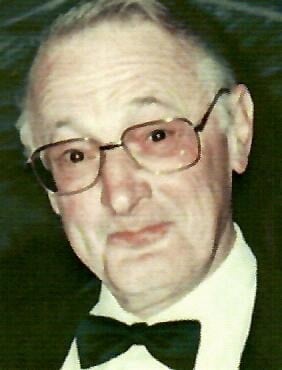
Patrick George Purcell was born in India in 1931 but soon returned to this country.
He did his national service in the Royal Artillery where he joined the regimental band (and was put on a charge for the ‘twiddles’ he added to pieces on his oboe). In spite of this they recommended him for a scholarship at the Royal School of Music which he won and where he met Eunice. Military music clearly appealed as he then joined the Irish Guards band and played in many venues across the world. Finally he bought himself out and came to work at Malvern in1966, serving as ‘Head of Wind’ until 1990.
Neil Page, who was his Director of Music for much of his Malvern career, records his professionalism and organisation. When Neil was invited to conduct the CBSO, legendary for their rough treatment of new conductors, he asked Pat for advice. “Don’t try jokes, they won’t laugh, keep them playing, they can’t talk back with instruments in their mouths and, oh yes, finish early” came the immediate response which Neil says worked well. Neil also remarked that Pat and Eunice were a music department in themselves!
Many OMs have commented on Pat’s expertise, professionalism and sense of fun. This is summed up by one of them: ‘Pat was one of those truly formative teachers, and I count myself as lucky to have had him in my life.’ Many others, including several professional musicians, have said that Pat inspired them to take up wind instruments, fostered their love of music and started them on their career paths which he followed with interest. But don’t mention saxophones which were anathema to Pat! There were also reminiscences of a production of ‘Oh What a Lovely War’, produced by Nigel Turner, for which Pat had arranged the music and which went to the Edinburgh Fringe. Others talked about Pat’s love of jazz and how he had kindled a life-long interest. Several of the OMs responding were also taught by Eunice and couple her name with his in their musical education. Others mentioned his guidance as a No.1 House Tutor where they found him a good listener and counsellor having seen life in the raw in the army. Some remember him as an enthusiastic member of the Malvern Swordsmen.
In retirement, Pat and Eunice kept up with a wide circle of OMs and previous staff and several recall visiting them both in their Malvern ‘cottage’. Pat and Eunice were popular attenders at the ex-staff walking group ‘The Crumblies’, still coming to pub lunches until fairly recently.
Pat had a stroke in late 2025 and died in February 2026, lucid to the last and tended by dear Eunice, listening to classical music and jazz on his CD player. His funeral and thanksgiving service was held on March 6th at The Vale and was sad, of course, but also full of joy as we remembered Pat’s life – the way he would have wanted. It was attended by large numbers of his former Malvern colleagues and many OMs. Tim Wright spoke about Pat’s early life, Neil Page about Pat’s working life and Robin Wedderburn about ‘My friend and colleague Pat’. The tributes were excellent and all received rounds of applause, unusual in the circumstances, but we are sure Pat would have approved.
We hold Eunice and Simon in our thoughts.
Words by Frank Harriss, March 2026
A Tribute to Pat Purcell by John de la Cour (2.64-69)
My story about Pat Purcell is in the best tradition of English schoolmasters whose pupils look back in later life and realise how much they owe to them.
I was one of his first pupils when he came to Malvern in 1966. He made the most valiant efforts to teach me to play the oboe. A couple of years later, by mutual consent, we agreed his efforts had been a failure.
However, this was through no fault of his. Although I was clearly musical – I sang in the Chapel choir for the whole of my time at Malvern, and was later to make a career in artists, orchestral and other music management – the business of converting notes on the page to my fingers on an instrument continually proved to be beyond me.
At that time, Mr Purcell was a smoker. Not the dedicated type such as Mr Bolam or Mr Vargas; more the occasional sort. Embassy tipped.
But, given that smoking then was the ultimate schoolboy crime, imagine the incentive for me to try harder when, in desperation, he would light up, seize my oboe, and blow the smoke out through the instrument as he demonstrated the passage in question.
Regrettably, I don’t suppose I had the presence of mind to suggest to him that if I tried the same exercise I would instantly improve! But, ever the professional, I can report he never invited me to join him.
In due course, time spent in lessons on the oboe got replaced with time spent talking about music. He introduced me to piece after piece – I remember managing just about to get through some of Dvorak’s fabulous wind serenade together – and it is in these sessions that my true debt to him was born.
Once, while discussing the expressive qualities of various instruments, he confided his opinion that the organ was grossly over-rated. Given the dominance of chapel in the school’s music, this would have been near sacrilege! I’ve often mused if later he was to share his view with Malvern’s great musical alumnus, the organist Thomas Trotter.
The immediate thing that became abundantly clear was his commitment to top standards. And in Pat’s book, top standards were represented by professionals. “Never mind about your hall tonight.” he told me one day. “The greatest oboist in the world is on the radio tonight (Eugene Goosens), and I want you to listen to him.”
His outlook took interesting and surprising turns. At lunch in No.2 one day, the conversation turned to some good amateur football player representing the old boys team from an arch rival of Malvern’s. I don’t think Pat exactly banged the table, but he might as well have done. “If you are serious about good football playing, you should be watching George Best from Manchester United.” There would have been an awkward silence. Professionalism meant money, and thus vulgarity.
I’d love to know how his world view went down in the Masters Common Room at the time. Around then, a debate was held in the Lyon Room something like “This House prefers the dedicated attitude of the amateur to that of the polished professional.” It would have made him see red.
But Pat obviously held out. His influence clearly resonated far beyond the confines of the music school, and over time attitudes changed. A related landmark very much down to him, albeit long after my time, was the recognition by the School that achievement in arts and music was as worthy of school colours as it had long been on the sports field.
But back to the listening. Pat told me he had been in the band of the Irish Guards. They had recently released an album of Beatles tunes arrangements. (It has since become a classic.) We listened to them while he explained about the craft of musical arranging, as demonstrated here by the masterly Arthur Wilkinson. His bandmaster had been the famous Lt-Col.Jaeger.
Who was to know that years later, Jaeger’s son was to become a close colleague and friend of mine? Or, in my subsequent career working with many conductors, arrangers and performers, what understanding I accrued of their profession, trials and tribulations, derived ultimately from the inspiration of a teacher who taught me what to listen for, what it was like to work as a professional, and how music enriches the lives of us all, – while intermittently blowing smoke through my oboe?
May he Rest in Peace.